Biharia Fortress

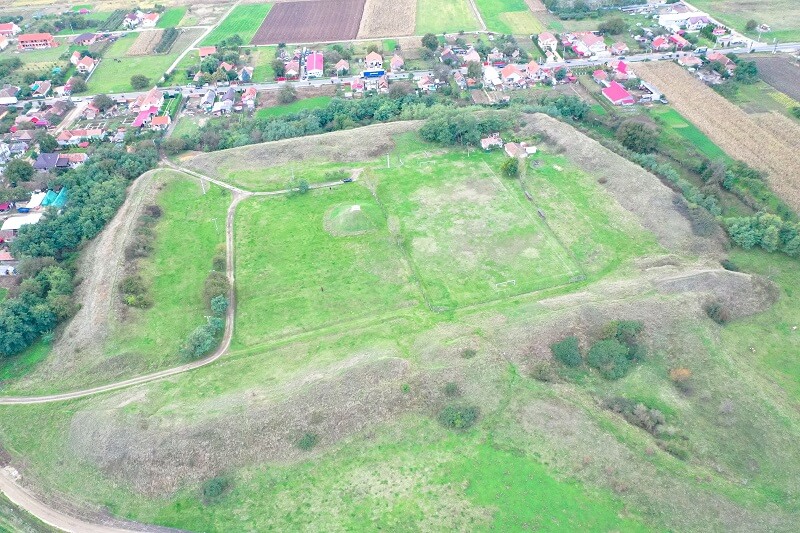
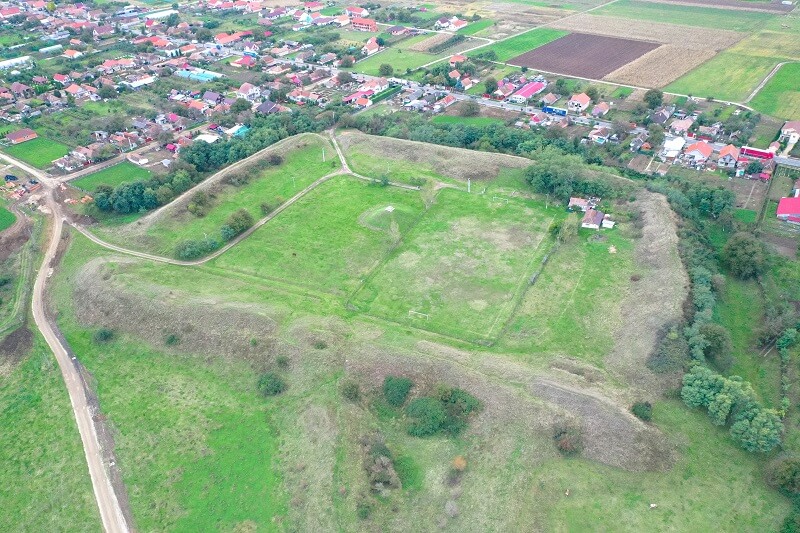
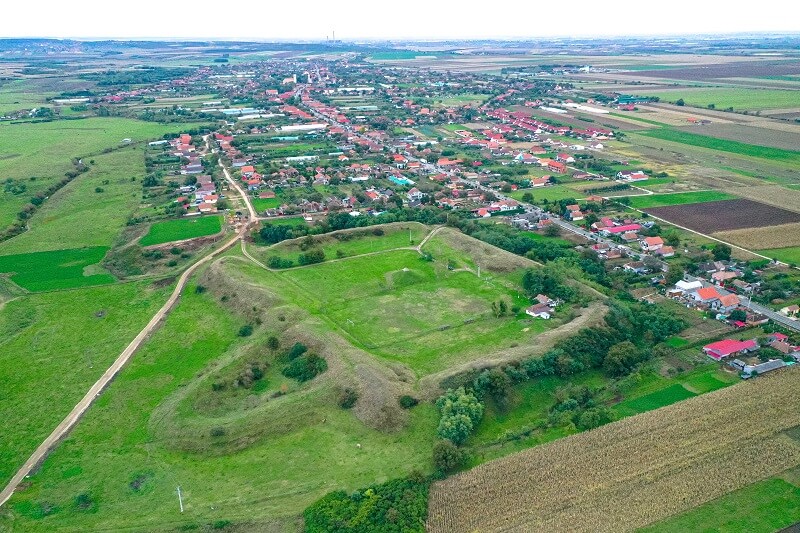
Located in the hearth of the homonymous village in the west of Bihor county, the Biharia Fortress is one of the first defensive constructions made by the Transylvanian medieval society. It is built in a rectangular shape (with a small bastion on the eastern side), with dimensions of 115 per 150 meters and an area of approximately 5 hectares. The defensive systems consisted of earthen walls 5-7 meters high, respectively of a ditch with water 15-20 meters wide, located on all sides of the fortress.
It is not known exactly by whom the citadel was built or the period of construction. The first attestation about this from the sources of the time is found in the work of Anonymus, Gesta Hungarorum. Here it is mentioned that the fortification was the seat of the voivodeship of Menumorut, which spatially stretched between Tisa, Someș and Mureș. The work also specifies that Menumorut was a vassal of the Byzantine emperor and refused to surrender to the Hungarian duke Arpad. Following this refusal, the Hungarians besieged the fortress in the 10th century and managed to conquer it in 12 days. In the 11th century, the fortress was under the rule of the hungarian king Ladislaus I (the Holy One), who established here the residence of the Roman Catholic Episcopate. In the 15th century, the citadel was used for administrative and economic purposes, being a customs collection point.
Description
Located in the hearth of the homonymous village in the west of Bihor county, the Biharia Fortress is one of the first defensive constructions made by the Transylvanian medieval society. It is built in a rectangular shape (with a small bastion on the eastern side), with dimensions of 115 per 150 meters and an area of approximately 5 hectares. The defensive systems consisted of earthen walls 5-7 meters high, respectively of a ditch with water 15-20 meters wide, located on all sides of the fortress.
It is not known exactly by whom the citadel was built or the period of construction. The first attestation about this from the sources of the time is found in the work of Anonymus, Gesta Hungarorum. Here it is mentioned that the fortification was the seat of the voivodeship of Menumorut, which spatially stretched between Tisa, Someș and Mureș. The work also specifies that Menumorut was a vassal of the Byzantine emperor and refused to surrender to the Hungarian duke Arpad. Following this refusal, the Hungarians besieged the fortress in the 10th century and managed to conquer it in 12 days. In the 11th century, the fortress was under the rule of the hungarian king Ladislaus I (the Holy One), who established here the residence of the Roman Catholic Episcopate. In the 15th century, the citadel was used for administrative and economic purposes, being a customs collection point.